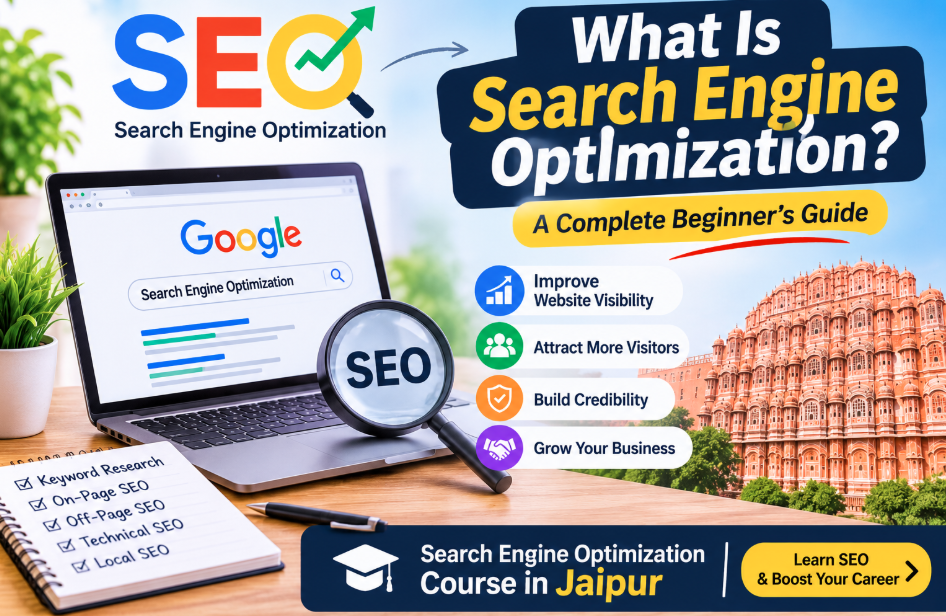
When people need information, products, or services, one of the first things they do is search online. They usually visit Google or another search engine, enter a query, and explore the results. For businesses, appearing in these search results can make a significant difference in attracting potential customers.
This is where Search Engine Optimization (SEO) becomes important. SEO helps websites improve their visibility in organic search results and attract visitors who are interested in their content, products, or services.
If you want to understand how websites rank on Google and develop practical digital marketing skills, enrolling in a Search Engine Optimization Course in Jaipur can help you learn the fundamentals and different techniques used by SEO professionals.
What Is Search Engine Optimization?
Search Engine Optimization, commonly known as SEO, is the process of improving a website to increase its visibility in unpaid search engine results.
The main purpose of SEO is to help search engines understand website content and make it easier for users to find relevant information.
For example, if someone searches for “best digital marketing institute in Jaipur”, Google displays web pages that its systems consider relevant and useful for that query.
SEO involves different activities, including keyword research, website content optimisation, technical improvements, internal linking, and backlink building.
Unlike paid advertising, organic SEO does not require businesses to pay Google for every click received from search results. However, SEO requires consistent work, monitoring, and improvements.
How Does SEO Work?
Search engines use automated systems to discover, understand, and organise web pages. When someone searches for information, these systems help determine which pages are most relevant to the query.
SEO mainly involves three important processes.
1. Crawling
Search engines use automated programs, commonly called crawlers or bots, to discover website pages. They follow links and use other discovery methods to find new and updated content.
A website with a clear structure and accessible pages can make it easier for search engines to discover its content.
2. Indexing
After discovering a page, Google may analyse its content, images, videos, and other information. It can then store information about the page in its search index.
Not every discovered page is necessarily indexed. Technical problems, duplicate content, and other factors can affect indexing.
3. Ranking
When someone enters a search query, Google uses many signals and systems to determine which results may be most useful.
Relevant content, page quality, usability, and other factors can influence how pages appear in search results.
Understanding these processes is an important starting point for anyone learning SEO.
Why Is Search Engine Optimization Important?
SEO is an important part of digital marketing because it helps businesses connect with people who are already searching for relevant information or services.
Here are some major benefits of SEO.
1. Improve Website Visibility
SEO helps businesses improve their chances of appearing in relevant search results. Better visibility can make it easier for potential customers to discover a website.
2. Attract Relevant Visitors
Keyword research and content optimisation help businesses target search queries related to their products and services. This can bring visitors who have a genuine interest in what the website offers.
3. Build Online Credibility
Websites that provide useful information and a good user experience can build trust with visitors. Consistent SEO improvements can support a stronger online presence.
4. Generate Business Enquiries
A well-optimised service website can attract people searching for specific services. These visitors may contact the business, request information, or become potential customers.
5. Support Long-Term Marketing Growth
SEO is an ongoing process. Consistent content improvements, technical maintenance, and performance monitoring can help a website build organic visibility over time.
Different Types of SEO
SEO includes several areas of optimisation. Each area focuses on improving a different part of a website’s search performance.
On-Page SEO
On-page SEO involves improving individual website pages to make their content clear, useful, and relevant to search queries.
Important on-page SEO activities include:
- Keyword research and placement
- SEO title optimisation
- Meta description writing
- Heading structure (H1, H2, and H3)
- Content optimisation
- Internal linking
- Image alt text
- URL optimisation
For example, a page targeting a digital marketing course should include relevant information about the course, its topics, and the needs of potential learners.
Off-Page SEO
Off-page SEO focuses on activities outside a website that can support its visibility and reputation.
Common activities include:
- Earning quality backlinks
- Guest posting on relevant websites
- Digital PR
- Brand mentions
- Relevant business citations
- Relationship building with industry websites
The focus should be on earning relevant, trustworthy links rather than collecting large numbers of low-quality backlinks.
Technical SEO
Technical SEO helps search engines access, crawl, and understand a website.
Some important technical SEO areas include:
- XML sitemap configuration
- Robots.txt management
- Canonical tags
- Website indexing
- Redirect management
- Broken link identification
- Mobile usability
- Website speed and performance
- Structured data
Technical SEO helps identify website issues that may affect search engine accessibility and user experience.
Local SEO
Local SEO helps businesses improve their visibility for location-based searches.
For example, a business offering services in Jaipur may want to appear when people search for related services in that city.
Important local SEO activities include Google Business Profile optimisation, accurate business information, local keywords, customer reviews, and relevant local citations.
Important SEO Tools You Should Know
SEO professionals use different tools to research keywords, monitor performance, and identify website issues.
Some useful tools include:
Google Search Console: Helps monitor search performance, indexing information, website queries, and search visibility.
Google Analytics: Provides information about website traffic, visitor behaviour, and traffic sources.
SEMrush: Supports keyword research, competitor analysis, backlink research, and website audits.
Google Keyword Planner: Helps discover keyword ideas and review estimated search data.
PageSpeed Insights: Helps identify website performance issues and opportunities to improve loading speed.
Learning how to use these tools can help you understand SEO tasks and make decisions based on available data.
What Will You Learn in a Search Engine Optimization Course in Jaipur?
If you are planning to learn SEO, choosing a structured training programme can help you understand different optimisation techniques step by step.
When exploring a Search Engine Optimization Course in Jaipur, look for a syllabus that covers the following topics.
Keyword Research
Learn how to find relevant keywords, understand search intent, review competition, and identify suitable keywords for website pages and blog posts.
SEO Content Writing
Understand how to create useful website content, optimise headings, write SEO titles and descriptions, and place keywords naturally.
Website Optimisation
Learn how to improve page structure, internal links, image information, URLs, and other on-page SEO elements.
Technical SEO
Understand crawling, indexing, XML sitemaps, robots.txt, canonical tags, redirects, and common technical website issues.
Link Building
Learn about relevant backlinks, guest posting, digital PR, link quality, and safe link-building practices.
Local SEO
Understand Google Business Profile, local search keywords, business information, customer reviews, and location-based optimisation.
SEO Reporting
Learn how to use Google Search Console, Google Analytics, and other tools to monitor website performance and prepare SEO reports.
Why Is Practical SEO Training Important?
Reading about SEO concepts is useful, but applying them to websites helps you understand how optimisation works in real situations.
A practical training programme should provide opportunities to work on activities such as:
- Conducting keyword research for a business website.
- Checking website pages for SEO issues.
- Writing SEO titles and meta descriptions.
- Optimising H1, H2, and H3 headings.
- Improving internal linking.
- Identifying indexing and crawling issues.
- Reviewing backlinks and competitor websites.
- Monitoring search performance through Google Search Console.
These activities can help you become familiar with common SEO responsibilities and improve your practical understanding.
Who Can Learn Search Engine Optimization?
SEO is useful for people from different educational and professional backgrounds.
- Students and fresh graduates: Develop digital marketing knowledge and explore SEO-related career opportunities.
- Business owners: Learn how to improve their website visibility and reach potential customers.
- Bloggers and content writers: Understand how to optimise articles and website content for search engines.
- Freelancers: Develop SEO skills that may help them offer website optimisation services.
- Working professionals: Add SEO knowledge to their existing skills and explore new career options.
- Website developers: Understand how technical website improvements support SEO.
Beginners can start with the fundamentals and gradually learn more advanced optimisation techniques.
Career Opportunities After Learning SEO
After developing SEO knowledge and practical experience, you can explore different roles in digital marketing.
Some possible career options include:
SEO Executive
An SEO Executive works on keyword research, on-page optimisation, link building, content improvements, and website performance monitoring.
SEO Analyst
An SEO Analyst reviews keyword performance, website data, competitor activity, and technical issues to identify optimisation opportunities.
SEO Specialist
An SEO Specialist manages different SEO activities, including technical SEO, on-page optimisation, content strategy, and off-page SEO.
Content SEO Executive
This role focuses on creating and optimising website content, blog posts, landing pages, and other resources to improve organic search visibility.
Freelance SEO Professional
Freelancers can provide keyword research, website audits, content optimisation, and other SEO services after developing sufficient practical experience.
How to Choose the Right SEO Training Institute in Jaipur
Before enrolling in an SEO course, review the training programme carefully. The right learning environment should help you understand SEO concepts and practise important activities.
Consider these factors:
- Course syllabus: Check whether on-page, off-page, technical, and local SEO are included.
- Practical sessions: Ask whether you will work on website optimisation activities.
- Trainer knowledge: Understand the trainer’s SEO experience and teaching approach.
- SEO tools: Check whether the course introduces commonly used SEO tools.
- Doubt support: Find out how you can ask questions during training.
- Course details: Review the duration, fees, schedule, and available learning format.
- Career guidance: Ask what career assistance or placement support is actually provided.
You can explore the SEO and digital marketing learning options at Willis Khan Institute to review the available course details and decide whether they match your learning requirements.
Conclusion
Search Engine Optimization helps websites improve their visibility in organic search results, attract relevant visitors, and build a stronger online presence. Learning keyword research, on-page SEO, off-page SEO, technical SEO, and local SEO can help you understand how websites are optimised for search engines.
If you want to develop these skills, a Search Engine Optimization Course in Jaipur can provide a structured starting point. Choose a programme that combines clear explanations with practical activities and useful SEO tools.
With consistent learning and hands-on practice, you can build a strong foundation in SEO and prepare yourself to explore opportunities in the digital marketing industry.